Funding reflects growing recognition of the essential role rural hospitals play in the communities they serve
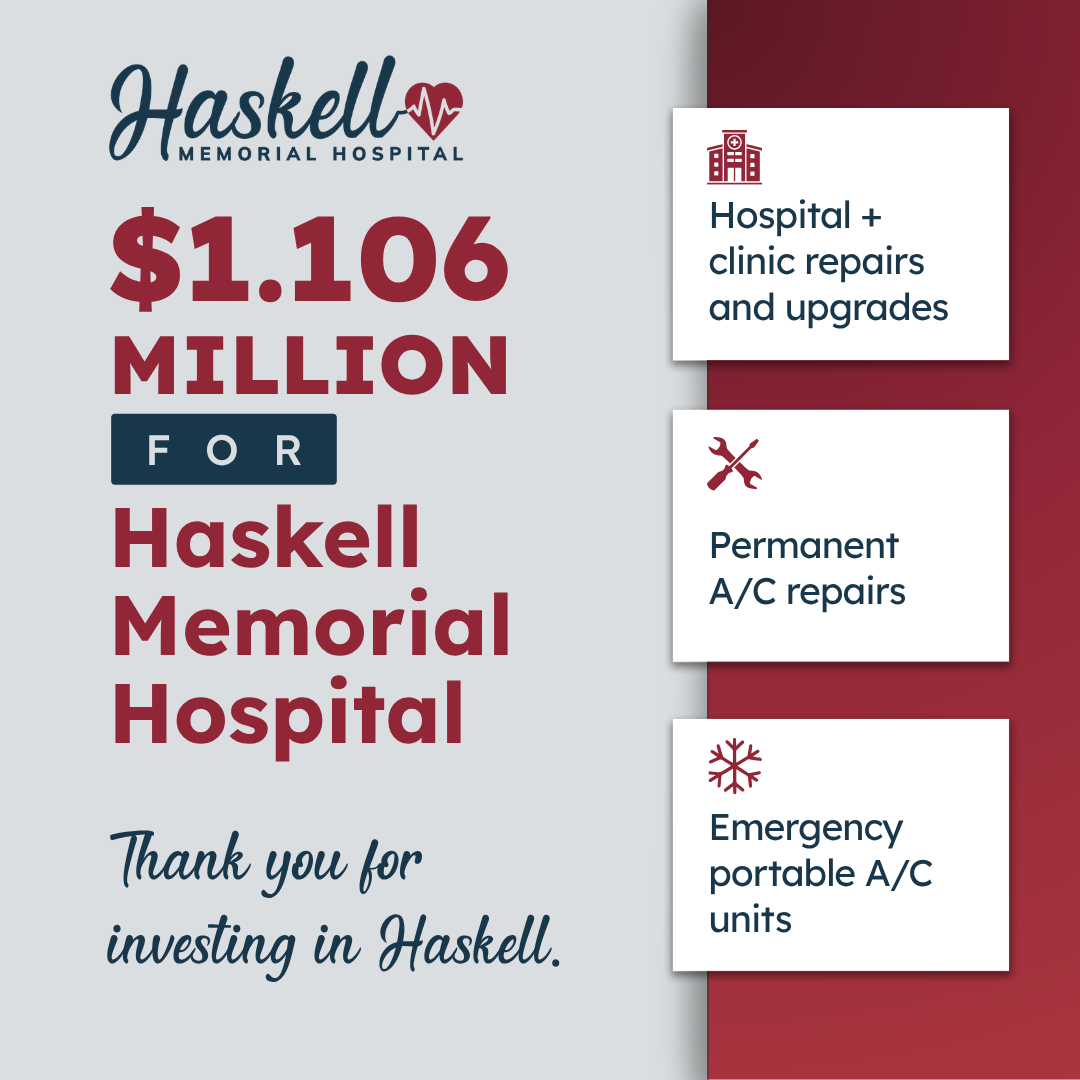
Haskell Memorial Hospital has received more than $1.1 million in philanthropic funding to strengthen hospital and clinic infrastructure, an investment that will help protect access to dependable healthcare in Haskell and surrounding rural communities.
The funding comes at a time when the importance of rural hospitals is receiving renewed attention across Texas and the nation. Policymakers, community leaders, and healthcare advocates are increasingly recognizing that a strong rural hospital is essential community infrastructure, providing emergency care, supporting local families and employers, and helping our rural communities remain viable places to live and work.
For Haskell Memorial Hospital, the investment represents recognition of that vital role and provides an opportunity to strengthen the physical infrastructure needed to continue serving the region.
“We are seeing the tide begin to turn in how people think about rural healthcare,” said Michelle Stevens, CEO of Haskell Memorial Hospital. “There is a growing understanding that rural Texans need strong local hospitals, and that maintaining that access requires continued investment. We are deeply grateful for this generous support and proud to accept it as an investment in the future of healthcare in Haskell and the surrounding region.”
The funding will support infrastructure improvements throughout the hospital and clinic, including upgrades to heating, ventilation and air conditioning systems and other physical improvements that help maintain a safe, high-quality environment for patients and employees.
Recent infrastructure needs have underscored the importance of maintaining and modernizing the systems behind everyday patient care. Funding received this summer has already helped Haskell Memorial Hospital respond to immediate air conditioning needs while preparing for permanent repairs and upgrades, including work on the compressor serving the north end of the hospital, replacement of the air conditioning unit at the nurses’ station, and replacement and upgrades to a unit serving the clinic.
These investments will address immediate needs while strengthening the hospital for the years ahead.
“Rural hospitals are expected to be ready when someone walks through the doors with a medical emergency, needs rehabilitation after an illness or injury, or simply needs dependable care close to home,” Stevens said. “That responsibility requires facilities and infrastructure capable of supporting that care every day. This investment helps us continue building that foundation for the people who depend on us.”
Haskell Memorial Hospital will continue evaluating infrastructure priorities and directing the funding toward projects that support patient care, reliability, and the long-term sustainability of local healthcare services.